RUN WITH THE PACK

For over 30 years, clients large
and small have trusted
Big Bad Wolf Creative Group
to tell their story.

Takeaways from the 2026 NAB convention

By UncategorizedNo Comments

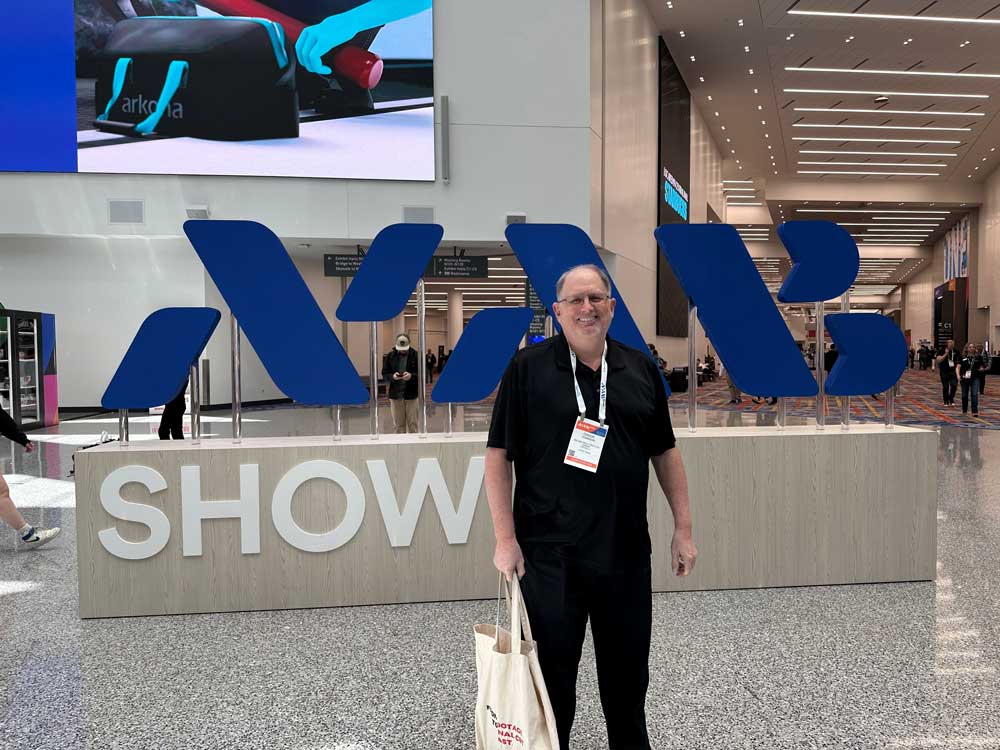
I was one of over 58,000 attendees at NAB 2026 this past week. As my 40th year attending, I have seen many technological and workflow changes.
The transition from standard definition videotape, to high definition tape formats. And the transition of video from file-based to IP based transports.
This week, I witnessed yet another change. AI technology and services were present in nearly 50% of all the vendors. Video over IP (SMPTE 2110) was also present in many products. In fact, Blackmagic Design is betting their company on ST-2110 with a slew of new products and adapters featuring that IP based technology.

Here are some of the products/services that stood out.

Cameras:

Sony’s HDC-5500R, 3500R and 3200R (the new R series) cameras that offer better color matching, IP and fiber transmission workflows. These are specifically for high-end live production situations.
Also, Sony’s new PXW-Z300 XDCam with built in AI and authenticity standards for newsgathering. One can go live directly with this camera. Just plug in internet in the included ethernet port and you are live!

Insta360 “Luna” dual-lens pocket camera features a dual-lens system, much like iPhones/Android phones, featuring optical zoom or multiple focal lengths. Leica color science for raw format.

DJI showed a new 360-degree camera – the Osmo 360 that will help creators. Also, a new Pocket 4 camera.

GoPro is back! After losing market share to other action cam makers, GoPro featured three new cameras. These are really cinema quality compact cameras featuring larger sensors, better low-light sensitivity, higher frame rates and AI based scene recognition.

Blackmagic Design showed a 12K full frame and 17k models. Blackmagic Design also showed a two lens immersive camera. I guess 3D cameras are back. These are specifically for Apple Vision Pro use.

There were many more new and established cameras on the floor but I focused on just the ones above.

SmallRig is not really a camera company, but provides rigs that support phones. Their rig offers professional mounting, audio integration and lens and accessory expansion.

Editing:

Editing software is no longer just editing software. It’s becoming an AI assistant, cloud collaboration hub and a full post-production pipeline.

Last year, the Avid and Adobe booths were tiny. This year, both came back full strength with large booths.

Avid lead the way with guest editors (in my opinion) showing how Avid helped them with collaborative editing and performance updates.

Adobe featured the addition of “Color Mode”, a direct shot at DaVinci Resolve. Adobe’s design is to keep color work inside the edit timeline. This is the first time Adobe is keeping the editing workflow from round-tripping to other apps in their ecosystem.
Adobe also showed that AI is now core, not optional. Firefly video editor gains new AI video models like Klin 3.0. AI assisted editing workflows in Adobe apps. Editing in After Effects! AI enhanced speech and automated cleanup tools. Frame.io drive mounts cloud storage like a local disk for a fully cloud-native post pipeline. Blackmagic tried this but it is not really working well – yet.

The biggest changes were found in DaVinci Resolve. Lots of AI tools were added or refined. AI face manipulation (aging, reshaping), AI object person search in footage, motion cleanup, sharpening and deblur tools. Resolve also added a new function tab – A photo page! RAW stills editing using the regular video color tools. A direct attack on Photoshop/Lightroom! Resolve comes in a free version and a paid version ($300 one time fee) and is hitting Adobe’s subscription base system.

Other cool stuff:

Belden – created angled patch panels that flare out in the back making it easy to address each patch. It also has a low depth so it would not make contact with a back wall.

Video link: Belden angled patch panels

Practical Magic and Innovation – back again from last year as an innovator of handheld smoke machines. Their new smoke fluid does not leave any residue on any surfaces it contacts. It also disburses within eight feet so it will not set off smoke alarms. Also new – the handheld smoke machines are now DMX addressable using a separate module that connects to the original smoke machine.

Video link: Handheld smoke machine

Summit Technology Laboratory – a really neat way to create immersive environments using their custom software. They can map video to any shape using any projector/camera. Really cool tech.

Video link: Projection mapping software

mtifilm.com was showing software (Cortex) that can detect and repair cosmic ray particles that strike large format sensors, leaving a dot within a pixel. It was amazing!

Video link: Radiation and detection

Thoughts about over the air broadcasting’s future:

I took an informal poll on how many years will OTA broadcasting be around?
– Broadcasters I talked to about 5-7 years depending upon NextGen TV mandated.
– Broadcast equipment companies, 5 years
– Random people 2-5 years

I spoke to people about the Nielsen issue and people just shook their heads

Importance of attending the NAB convention

By NABNo Comments

Attending the NAB Show is more than just a trip to a trade floor—it’s an investment in staying relevant in a fast-moving media landscape. NAB brings together broadcasters, filmmakers, streaming professionals, audio engineers, technologists, and business leaders from around the world, all in one place. From hands-on demos of the latest cameras, production gear, and post-production tools to first looks at emerging workflows in AI, cloud production, and IP-based broadcasting, NAB offers direct access to innovations that shape how content is created, distributed, and monetized. Seeing these tools in action—and asking questions face-to-face—provides clarity that no spec sheet or webinar can match.

Equally important is the perspective NAB provides on where the industry is headed. Educational sessions, panels, and keynotes dig into real-world challenges like monetization, audience engagement, accessibility, and evolving distribution models. Just as valuable are the hallway conversations and chance meetings that spark partnerships, solve problems, or inspire new business ideas. For media professionals who want to sharpen their skills, future-proof their operations, and stay connected to the broader industry ecosystem, NAB isn’t just an event—it’s a strategic checkpoint for growth and innovation.

The role of AI in the creative fields

By AINo Comments

Artificial intelligence is transforming the creative industry in ways once thought impossible. From generating visual concepts and writing scripts to composing music and editing video, AI tools can now assist artists, designers, and producers at nearly every stage of the creative process. Platforms like Adobe Firefly, Runway, and ChatGPT accelerate brainstorming, automate tedious workflows, and open doors for smaller studios to produce high-quality content with fewer resources. For many creatives, AI has become a partner that boosts efficiency and helps them focus more on storytelling, emotion, and design—rather than repetitive technical tasks.

Yet, as with any innovation, AI also brings challenges. Concerns about originality, authorship, and the displacement of human skill are valid and deserve serious attention. Some fear that automation could dilute creative authenticity or replace traditional craftsmanship. However, the reality is that AI isn’t replacing creativity—it’s redefining it. Just as cameras, synthesizers, and digital editing once revolutionized their fields, AI is simply another tool in the toolbox—one that, when used wisely, can expand creative possibilities rather than limit them.

Livestreaming is still relevant after COVID

By LivestreamNo Comments

Livestreaming events offers a plethora of advantages that significantly enhance accessibility, engagement, and reach. Firstly, livestreaming breaks down geographical barriers, enabling individuals from around the world to participate in real-time without the constraints of physical attendance. This expanded audience reach not only increases the event’s exposure but also fosters inclusivity by accommodating those who may be unable to attend in person due to distance, travel restrictions, or other commitments. Furthermore, livestreaming facilitates immediate interaction and engagement through features such as live chat, polls, and Q&A sessions, allowing remote participants to actively participate in discussions, ask questions, and provide feedback. This interactive element not only enhances audience engagement but also creates a sense of community and connection among participants, transcending physical boundaries and fostering a global dialogue.

Moreover, livestreaming events can have a lasting impact beyond the live broadcast, as recordings can be archived and repurposed for future use. These archived livestreams serve as valuable resources for those who missed the live event or wish to revisit specific segments or discussions. Additionally, repurposing livestream content for marketing purposes, such as creating highlight reels or promotional clips, extends the event’s lifespan and amplifies its reach by reaching new audiences through social media, email campaigns, or other digital channels. In essence, livestreaming an event offers a multifaceted approach to audience engagement, extending the event’s reach, fostering real-time interaction, and creating valuable content assets for continued engagement and promotion.

Transfer videotape before it’s too late

By Videotape transferNo Comments

The urgency of transferring video content from outdated formats like videotape is paramount due to the inherent degradation of such mediums over time. Videotapes, particularly analog formats like BetaCamSP, U-Matic, one-inch type-C, 2″ quad, VHS, Betamax, or Hi8, are susceptible to physical wear and deterioration, leading to a gradual loss of image and sound quality. Factors such as temperature fluctuations, humidity, and magnetic fields exacerbate this degradation process, making it imperative to preserve valuable video footage before it becomes irreversibly damaged. By transferring video content to digital formats, such as MP4 or MOV files, organizations and individuals can safeguard their memories, documents, and creative works against the ravages of time and technological obsolescence.

Furthermore, the transfer of video content to digital formats not only preserves its integrity but also enhances accessibility and usability. Digital files are easily stored, duplicated, and shared across various platforms and devices, eliminating the constraints associated with physical media. This accessibility ensures that valuable video content remains readily available for viewing, sharing, and repurposing, thereby extending its lifespan and maximizing its potential impact. Moreover, digitized video content can undergo restoration and enhancement processes to improve visual and audio quality, breathing new life into old recordings and ensuring their relevance and usability for future generations. In essence, the transfer of video from deteriorating analog formats to digital media represents a crucial step in preserving our cultural heritage, personal memories, and artistic creations for posterity.

Video on websites

By Video on websiteNo Comments

In today’s digital landscape, integrating video content into websites has become more than just a trend; it’s a strategic necessity. Video offers a dynamic and engaging way to communicate with audiences, capturing their attention more effectively than static text or images alone. By incorporating video on a website, businesses can convey their message more vividly, allowing visitors to grasp concepts quickly and emotionally connect with the content. Whether it’s showcasing products, explaining services, or sharing testimonials, video enables brands to create immersive experiences that resonate with viewers on a deeper level, ultimately driving engagement and fostering brand loyalty.

Moreover, utilizing video on a website can significantly enhance SEO (Search Engine Optimization) efforts. Search engines like Google prioritize websites with diverse and engaging content, including videos. By embedding relevant videos, websites can increase their visibility in search results and attract more organic traffic. Additionally, video content tends to keep visitors on a website longer, reducing bounce rates and signaling to search engines that the site offers valuable and engaging content. As online competition continues to intensify, leveraging video has become an indispensable tool for businesses seeking to stand out in the digital marketplace and maintain a competitive edge.

65
Awards Won
268
Completed Designs
37
GitHub Repo's
439
Cups of Coffee